

SAP Advanced Variant Configuration – modern variant configuration in S/4HANA
SAP Advanced Variant Configuration (AVC) is the modern solution for variant configuration in the SAP S/4HANA environment. It combines powerful product modeling with modern configuration processes and establishes the foundation for the end-to-end utilization of complex product knowledge.
25+ Years
Variant configuration
S/4HANA
Integration
LO-VC & AVC
Expertise
End-to-End
Configuration
What is SAP Advanced Variant Configuration?
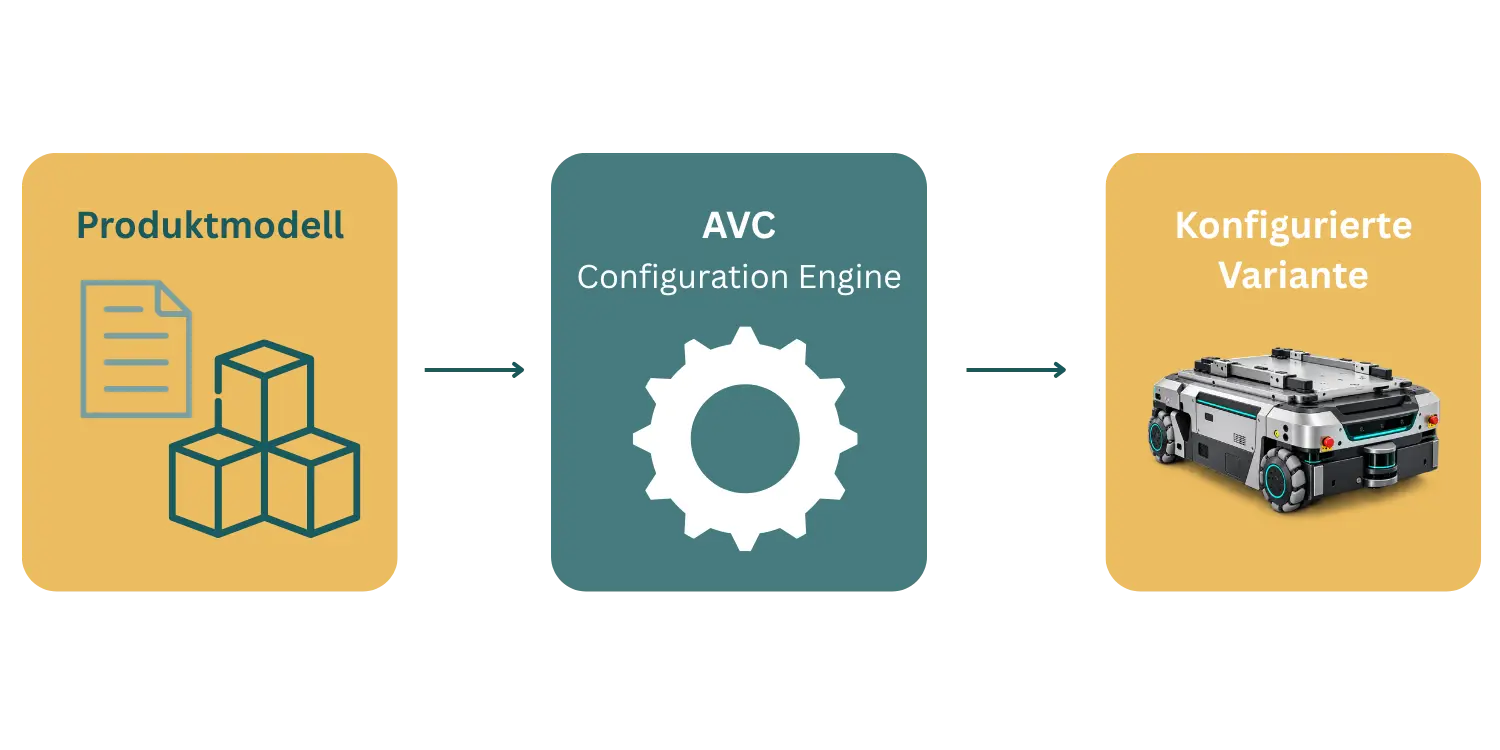
At its core lies the digital product model. Characteristics, values, product structures, and dependency knowledge define the possible product variants and determine how a technically valid configuration is derived from individual requirements.
AVC offers additional capabilities for modeling, simulation, analysis, and integration, making product knowledge an integral part of an end-to-end configuration architecture.
What distinguishes SAP AVC?
SAP AVC integrates product modeling, configuration logic, and modern S/4HANA processes. Crucial here is not merely the configuration itself, but the ability to model complex product knowledge in a structured way, analyze it, and incorporate it into various processes.
Modern User Experience
Dynamic configuration processes help users assemble even complex products in a structured manner.
Powerful modeling
Characteristics, values, product structures, and relational knowledge form the foundation of sophisticated variant models. Even complex dependencies can be modeled in a structured manner.
Simulation & Analysis
Variant models must not only function; their behavior must remain comprehensible. Simulation, tracing, and analysis functions assist modelers in verifying configurations and systematically refining product logic.
Integration & Scalability
AVC can be integrated into S/4HANA processes and advanced configuration scenarios. This enables product knowledge to be leveraged across various processes and touchpoints.
Additional benefits for companies
Switching between CTO and ETO configurations
-
Cross-plant configuration
-
Advanced analysis functions
-
Support for service and subscription
The SAP AVC Configuration Engine
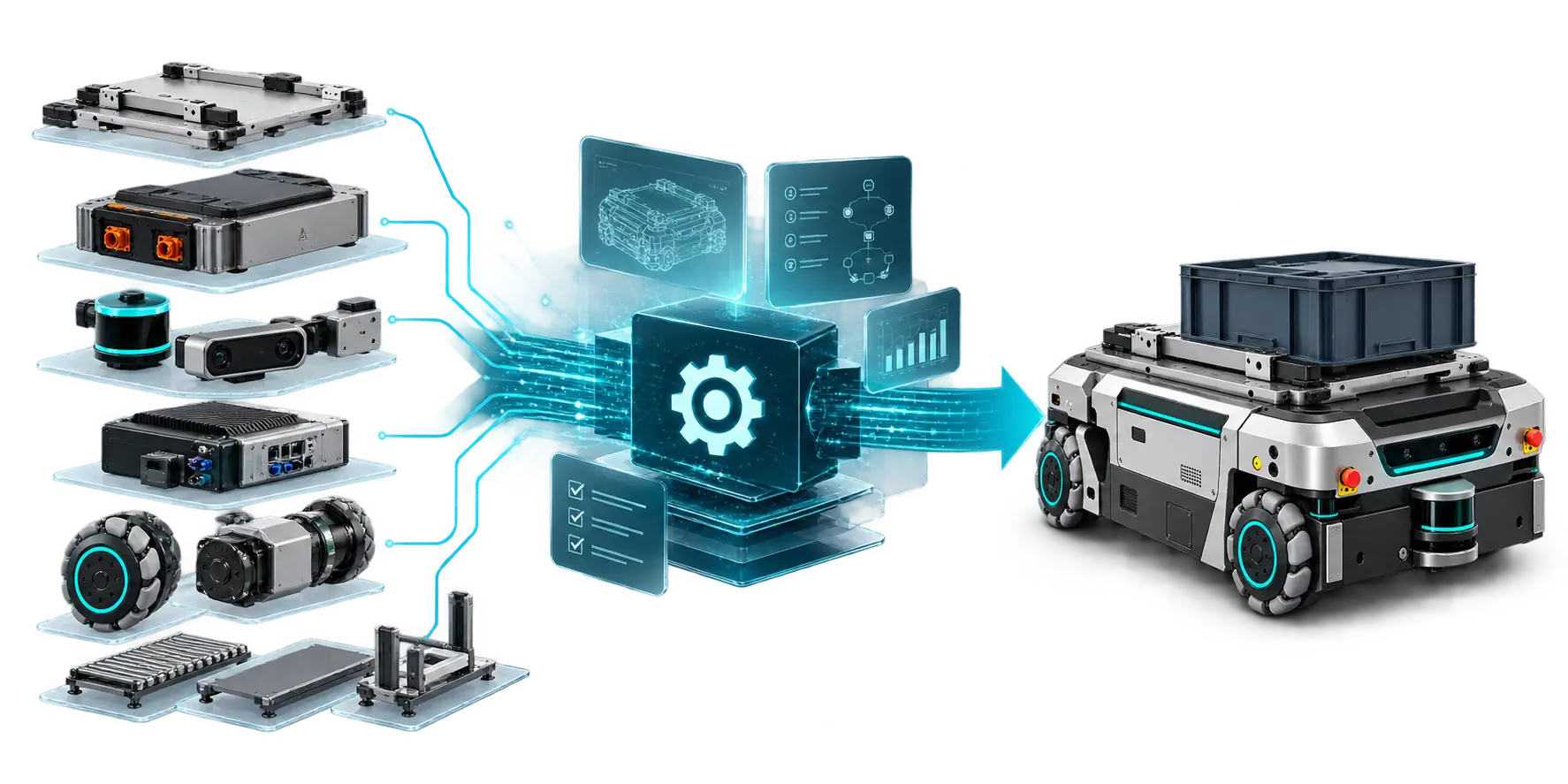
The configuration engine evaluates the characteristics, values, rules, and dependencies of a product model to determine valid product configurations. It ensures that—even with a wide range of variants—only technically permissible combinations are generated and that modelers can understand the underlying behavior.
Evaluate rules and dependencies
Relationship knowledge governs the behavior of the product model and maps technical interdependencies between characteristics, values, and product structures.
Determine valid configurations
The underlying product logic ensures that requirements and product structure are compatible.
Analyze models
Simulation, trace, and analysis functions help to understand configuration processes and identify potential for optimization.
Product Modeling with SAP AVC
A good AVC model must therefore be understandable, high-performing, maintainable, and extensible in the long term.

Characteristics & Values
Features and selection options
Product structures
Components and structures
Relationship knowledge
Rules and dependencies
Constraints
Structuring complex relationships
Modeling standards
Maintainable and extensible in the long term
SAP AVC in S/4HANA – intended end-to-end
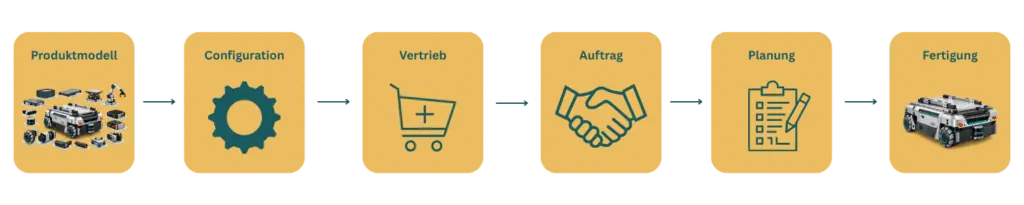
The strength of SAP AVC becomes particularly apparent when variant configuration is not viewed in isolation. A product configuration impacts numerous business processes—from sales and order processing to manufacturing.
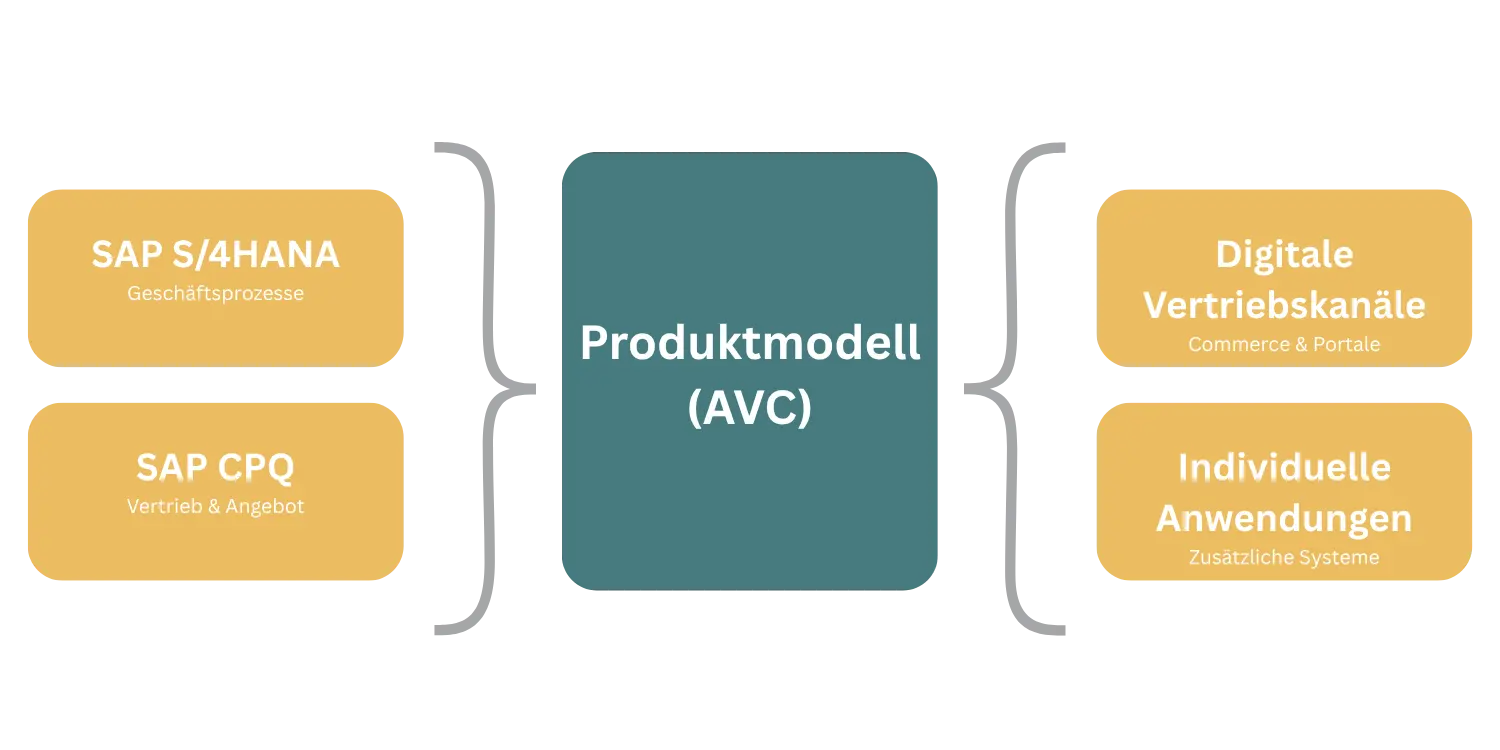
Model once. Configure anywhere.
Ideally, complex product knowledge should not have to be built up and maintained separately for every process and sales channel.
A modern configuration architecture therefore aims to model product logic centrally and make it usable across various configuration scenarios. The “Model once – configure anywhere” approach is already part of the strategic positioning on the existing AVC page.
SAP LO-VC or SAP AVC?
Ideally, complex product knowledge should not have to be built up and maintained separately for every process and sales channel.
A modern configuration architecture therefore aims to model product logic centrally and make it usable across various configuration scenarios. The “Model once – configure anywhere” approach is already part of the strategic positioning on the existing AVC page.
SAP LO-VC
Proven variant configuration
For many years, SAP LO-VC has formed the technological foundation for numerous complex SAP variant models.
SAP AVC
Modern Variant Configuration
SAP AVC addresses modern variant configuration scenarios within the S/4HANA environment and opens up additional possibilities for modeling, analysis, and integration.

Carrying existing product knowledge into the future
Transforming from LO-VC to AVC involves more than just the technical migration of existing models; product knowledge, model structures, processes, integration, and future requirements must all be considered together. You can find details on the approach on our transformation page.
Our services related to SAP AVC
AVC Strategy & Architecture
Together, we define the role of Advanced Variant Configuration within your future SAP and configuration architecture.
AVC Modeling
We develop and optimize product models, relational knowledge, and modeling standards for complex products with a wide range of variants.
AVC Implementation
We support the structured implementation of Advanced Variant Configuration – from conception to productive use.
Integration
We examine AVC in conjunction with S/4HANA processes, SAP CPQ, and other relevant systems and configuration channels.
Optimization & Performance
We analyze existing AVC models in terms of structure, maintainability, model quality, and performance.
Workshops & Training
We impart practical knowledge of AVC – ranging from strategy and architecture to concrete product modeling.
Frequently asked questions answered quickly.
What is SAP Advanced Variant Configuration
SAP Advanced Variant Configuration (AVC) is the modern technology for variant configuration in the SAP S/4HANA environment. It enables the modeling of complex products and the utilization of product logic within modern configuration and business processes.
What does SAP AVC mean?
AVC stands for Advanced Variant Configuration. The technology is used for configuring complex products with a wide range of variants within the SAP S/4HANA environment.
What is the difference between SAP LO-VC and AVC?
SAP LO-VC is the classic technology for variant configuration in SAP. AVC addresses modern S/4HANA scenarios and offers additional capabilities for modeling, analysis, and integration. Which technology is suitable depends on the specific model, process, and system landscape.
Does SAP LO-VC need to be replaced by AVC?
Not necessarily. Existing LO-VC landscapes should be evaluated on a case-by-case basis. Key factors include product models, processes, and integrations, as well as the future S/4HANA and configuration strategy.
What role does dependency knowledge play in SAP AVC?
Dependency knowledge maps rules and dependencies between characteristics, values, and product structures. It ensures that product logic is taken into account during configuration.
Can SAP AVC be used with SAP CPQ?
AVC can be part of a configuration architecture in which product knowledge is also utilized in sales-oriented Configure-Price-Quote scenarios. The specific implementation depends on the respective system and integration architecture.
How does an SAP AVC implementation begin?
To begin with, requirements, existing product models, processes, integrations, and the desired target architecture should be analyzed. Based on this, modeling, implementation, and integration strategies can be defined.
SAP AVC for Your Configuration Strategy
Are you looking to implement SAP Advanced Variant Configuration, optimize existing AVC models, or determine the future role of AVC within your S/4HANA landscape?
Our VC specialists work with you to examine product models, processes, and system architecture, developing a tailored approach for your variant configuration.